Waterproof a Metal Roof Without Tearing It Off
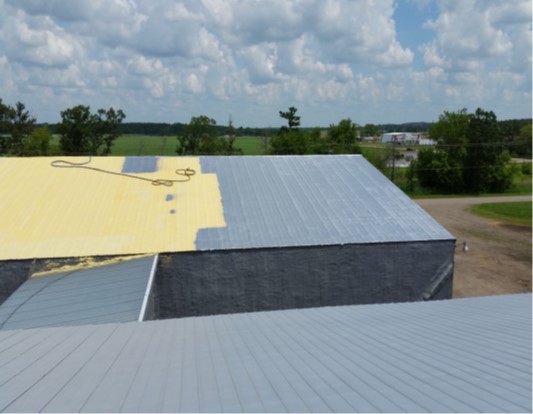
OR-80SLM Silver Lining Membrane is a Miami-Dade approved pure polyurea roof membrane that encapsulates the panel, the laps, and every fastener as one seamless sheet. Over 7001 Primer, with OR7K for detail and transition work, it turns a leaking standing-seam or R-panel roof into a monolithic waterproof deck — no tear-off, no landfill, no shutdown.
Request a Roof Spec & BudgetWhy Metal Roofs Fail — and Why a Membrane Fixes It
Every Fastener Is a Hole in the Roof
An exposed-fastener metal roof has thousands of screws driven through the panel into purlin. Each one relies on a neoprene washer that hardens, compresses, and backs out under thermal cycling. Encapsulating the entire deck seals all of them at once — permanently, and without a screw-by-screw retrofit.
Laps Move; Sealant Does Not
A 100-ft steel roof run moves close to an inch across its annual temperature swing. Butyl lap tape and side-lap sealants are asked to absorb that repeatedly for decades. OR-80SLM carries 300–400% elongation and simply moves with the panel.
Ponding Does Not Bother It
Low-slope metal, valley pans, and gutter transitions collect water that a lapped system will eventually get under. A fully adhered polyurea membrane is not a shingled water-shedding system — it is a waterproofing membrane. Standing water sits on top of it with nowhere to go.
No Tear-Off, No Shutdown
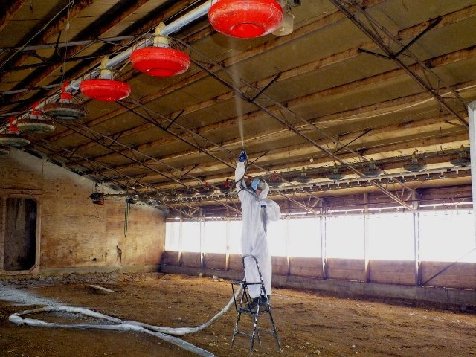
The existing roof stays in place as the substrate. That means no exposed deck, no weather risk, no disposal cost, and — for a warehouse, poultry barn, or cold storage — no interruption to what is happening underneath.
Metal Roofs We Waterproof
Commercial, industrial, and agricultural. Standing seam, R-panel, corrugated, and everything that has already been patched twice.
- Warehouse & distribution roofs
- Standing seam & R-panel
- Corrugated & through-fastened
- Machine sheds & pole barns
- Poultry & livestock barns
- Potato & produce storage
- Cold storage & food processing
- Manufacturing & shop buildings
- Roof-to-wall & parapet transitions
- Curbs, vents & mechanical penetrations
The Metal Roof Waterproofing System
Prep, prime, detail, membrane. Each layer has a defined role and a defined thickness.
The Roof Is Not Worn Out. The Details Are.
Pull a maintenance file on almost any twenty-year-old metal roof and the pattern is the same: the panel steel is still structurally sound, the coating has faded but is intact, and every documented leak traces to a fastener, a side lap, an end lap, a curb, or a transition. The flat part of the roof is fine. The details are what failed.
That is a predictable outcome of how a metal roof works. It is a water-shedding assembly, not a waterproofing one. It depends on slope and on hundreds of mechanical seals — screw washers, butyl lap tape, sealant beads, counterflashing — each with a service life measured in single-digit years, on a roof expected to last thirty.
Encapsulation changes the assembly. Spraying OR-80SLM over the prepared deck converts a shedding roof into a fully adhered waterproofing membrane. There are no laps to open, no washers to harden, and no sealant joints to inspect — because every one of them is now under a continuous sheet of polyurea.
OR-80SLM at a Glance
What a Metal Roof Waterproofing Job Actually Involves
Sequence matters more than product on this scope. A typical commercial or agricultural project runs:
- Survey and moisture scan. Identify wet insulation, rusted-through panel, rust-jacked fasteners, and any structural deficiency. Wet insulation gets cut out and replaced — you do not encapsulate a wet assembly.
- Fastener remediation. Back-out screws replaced or driven, spinners replaced with oversize fasteners, and severely corroded panel sections patched or replaced.
- Pressure wash and degrease the full deck. Power-tool clean corroded areas to SSPC-SP3. Verify chlorides below 7 µg/cm² on coastal and ammonia-exposure roofs.
- 7001 Primer across the deck, and doubled at seams, curbs, and transitions.
- Stripe-coat the details — side laps, end laps, every fastener line, curbs, and roof-to-wall — with OR7K before the field goes on.
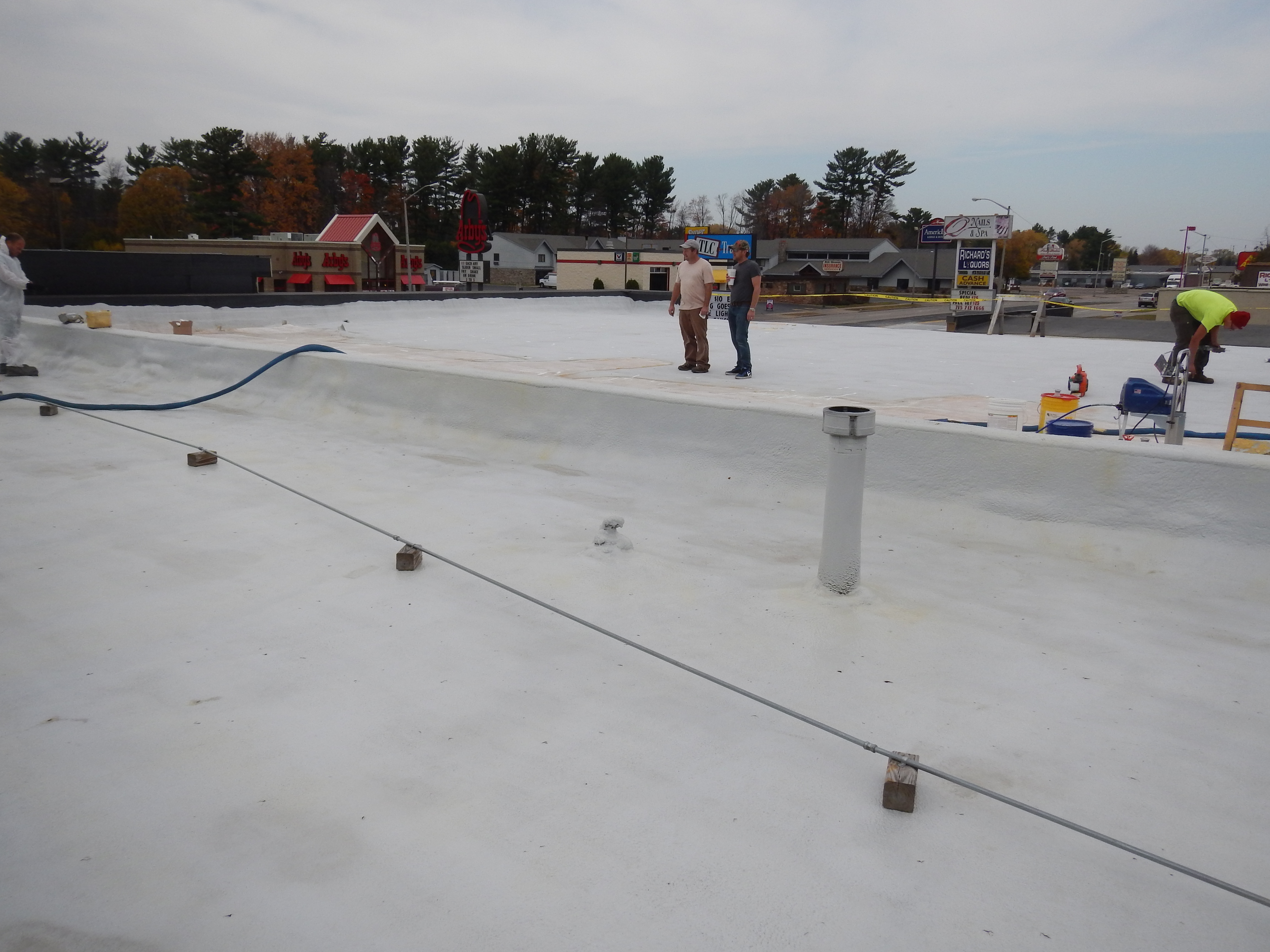
- Spray OR-80SLM to 60 mil across the field, tying into the pre-detailed areas.
- Terminations and edge metal built to 80–100 mil and wrapped properly at the eave, rake, and gutter line.
Building operations continue underneath throughout. Nothing is ever opened to the weather.
Metal Roof Projects
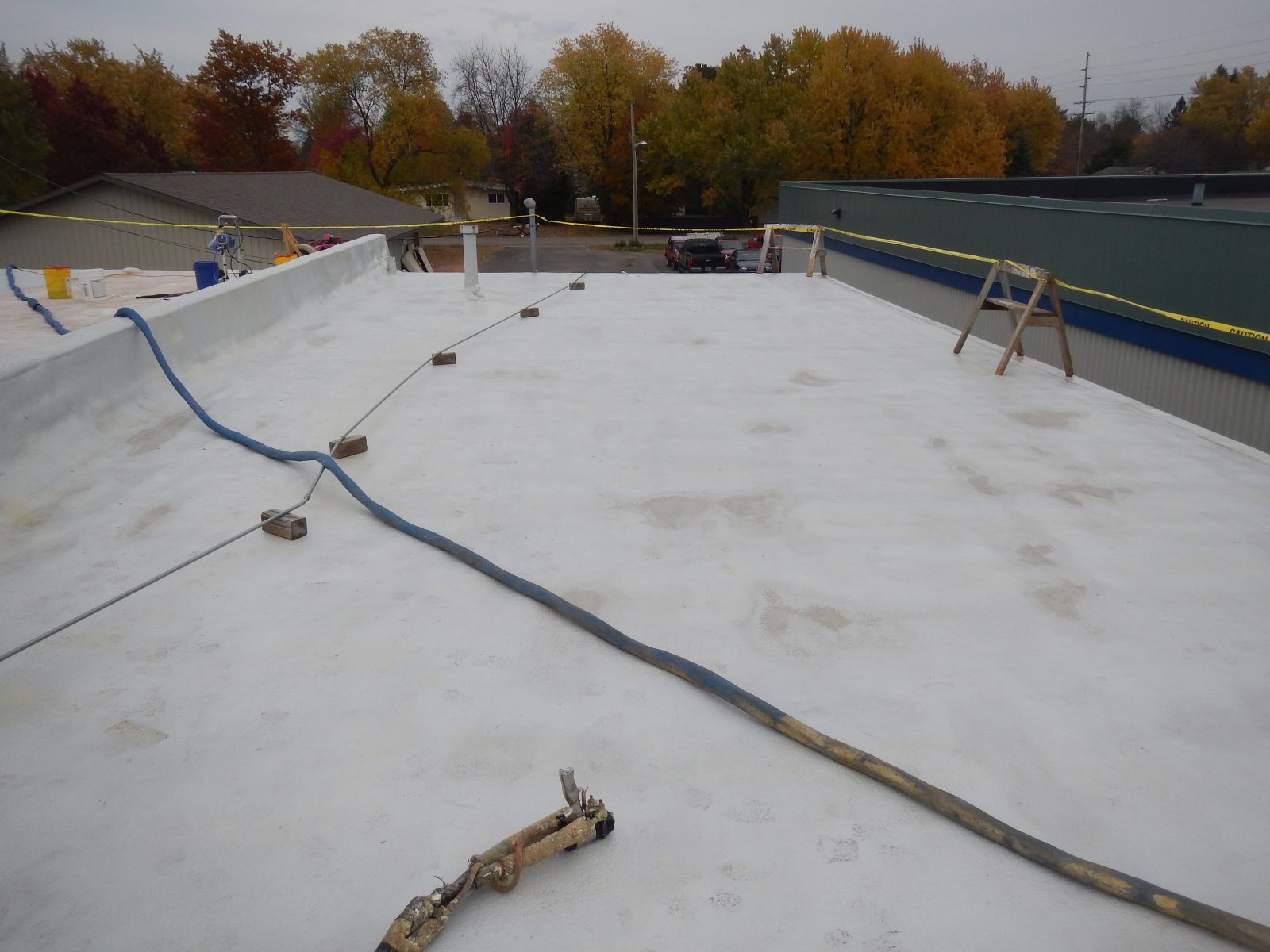
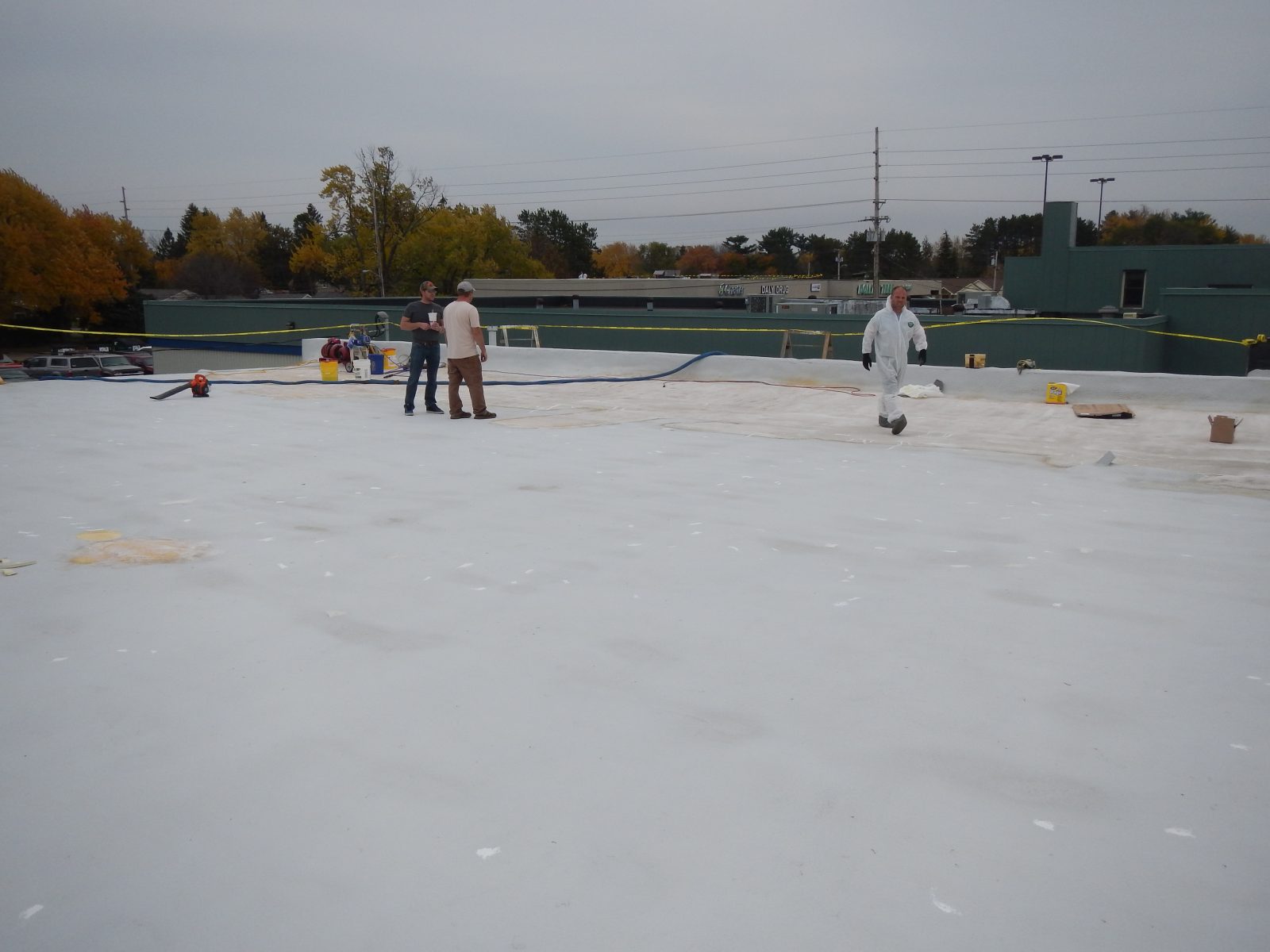
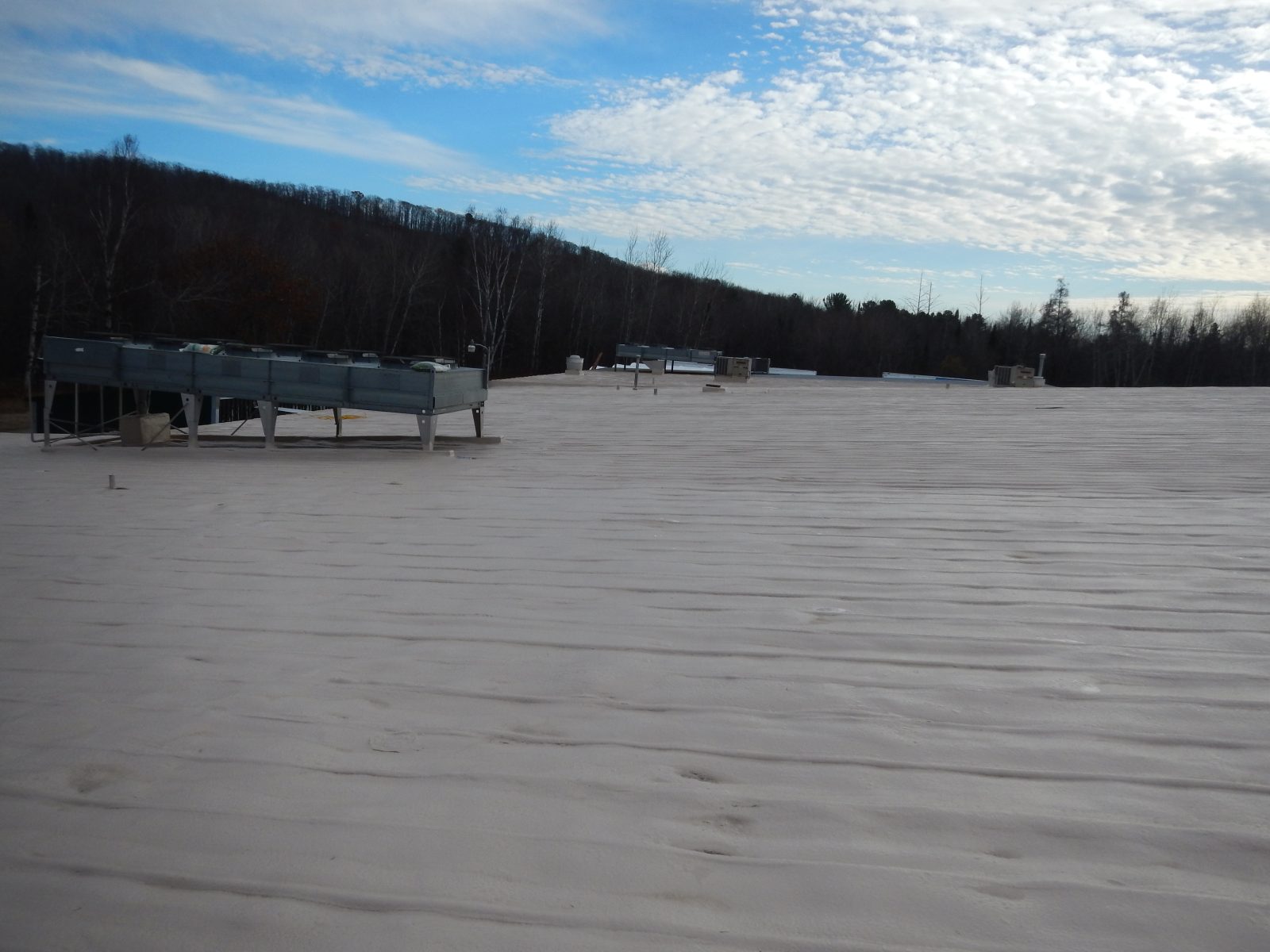
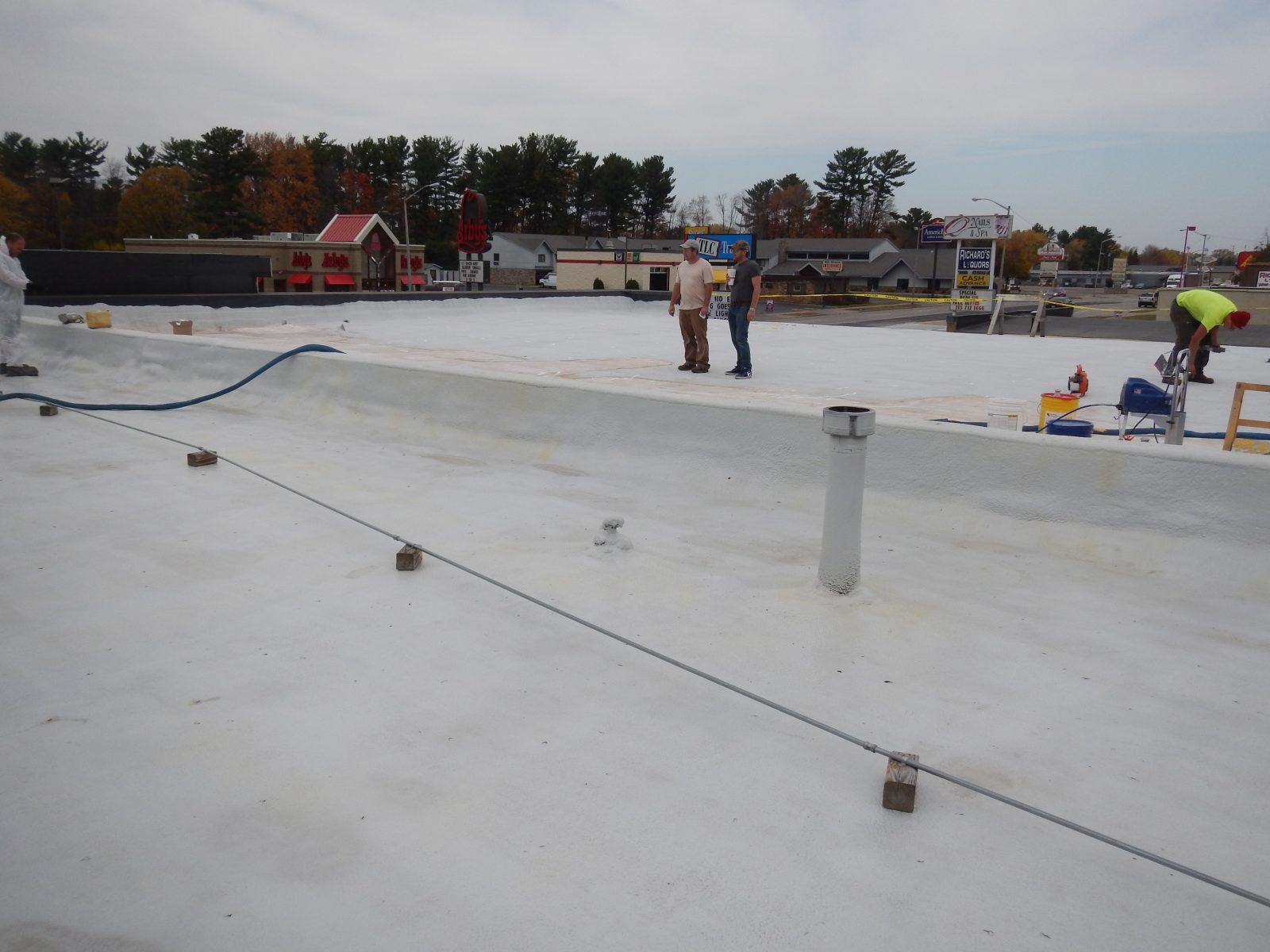
Send Us the Roof Area, Panel Type, and Age
Square footage, panel profile, approximate age, and what is leaking now. You will get a spec, a DFT schedule, coverage math, and budget pricing back from someone who has actually walked roofs like yours. Roofing contractors: mention your region for the wholesale schedule.
Request a Spec & BudgetRequest a Roof Spec & Budget
Tell us about your project and we will follow up with product details, technical data sheets, and pricing.
Frequently Asked Questions
Frequently Asked Questions
What building owners, facility managers, and roofing contractors ask us.
Evaluating the Roof
How do I know if my roof is a candidate for encapsulation instead of replacement?
Three questions decide it. Is the panel steel structurally sound with no rust-through over open deck? Is the insulation dry, or can the wet areas be cut out and replaced? Is the structure adequate for the loads it carries today? If all three are yes, encapsulation is almost always the better economics. If the deck has section loss or the insulation is saturated across large areas, you are past it.
What does it cost compared to a tear-off and replacement?
Meaningfully less, and the gap widens on occupied buildings. A replacement carries tear-off labor, disposal, exposure risk, and — on a warehouse, processing plant, or storage building — the cost of interrupting whatever is happening underneath. Encapsulation has none of those. The material cost is higher per square foot than a coating; the total project cost is a fraction of a replacement.
Can it go over an existing acrylic or silicone roof coating?
Sometimes. Silicone in particular is difficult to overcoat — it is designed to shed. Run an adhesion test patch with 7001 Primer before committing. If the test pulls, the old coating has to be removed. We would rather run the test than warranty a bond we have not verified.
What about ponding water on low-slope sections?
It is a non-issue for a fully adhered polyurea membrane. Unlike a lapped or mechanically-fastened system, there is no seam for standing water to work into and the membrane is not breathable. Ponding remains a housekeeping and debris concern, not a leak risk.
Preparation & Application
Do the fasteners have to be dealt with first?
Yes. Backed-out screws get driven or replaced, spinners get oversize replacements, and rust-jacked fasteners get remediated before anything is sprayed. The membrane seals against water — it will not hold a loose fastener in place, and a screw that backs out later will tent the membrane above it.
Can it be applied over rust?
Over sound, tightly-adhered rust after SSPC-SP3 power-tool cleaning, yes — the membrane isolates the oxide from moisture and oxygen and stops the reaction. Over loose scale or flaking corrosion, no. And over perforated panel, no: that section gets patched or replaced first.
Does the building have to shut down?
No. That is the primary operational argument for encapsulation. The existing roof stays in place as the substrate, so at no point is the interior exposed. Work proceeds section by section and rooftop equipment is detailed in place.
What weather window do you need?
Fast-set polyurea is more forgiving than most roof systems because it gels in seconds — ambient humidity has far less opportunity to affect the film than with a coating that stays wet for hours. Substrate temperature and dew point still govern. Practically, this extends the workable season on both ends compared to acrylic systems.
Performance & Documentation
What does Miami-Dade approval actually mean for my project?
It is third-party verification of wind uplift and impact performance under one of the most demanding test protocols in North America. Outside high-velocity hurricane zones it is not a code requirement, but it is documentation that specifiers, insurers, and owners recognize — useful on any project where the membrane has to be justified on paper.
How does it handle hail?
A 60-mil elastomeric membrane with 300–400% elongation and 400–500 pli tear strength absorbs impact rather than fracturing. Hail can dent the panel underneath; the membrane stretches over the deformation and stays watertight. Compare that to a rigid coating, which fractures at the dent perimeter.
Does it need to be recoated periodically?
The membrane is not a sacrificial coating. Aromatic polyurea chalks cosmetically under UV without losing physical properties. Where long-term appearance matters or a reflective finish is wanted, an aliphatic topcoat can be specified over it — that topcoat, not the membrane, becomes the eventual maintenance item.
Can I use this on the metal walls too?
Yes. Metal wall panel and siding take the same system, and wind-driven rain through side laps is a common complaint on older buildings. The vertical application is straightforward with fast-set polyurea because it does not sag. Roof-to-wall transitions get built to 100 mil either way.
Question Specific to Your Roof?
Send the details. You will get an answer from someone who specs these systems, not a call center.
Ask a Question